Key Takeaways
- Bot and AI traffic is actively polluting retargeting pools, meaning you’re paying to re-engage visitors who were never human.
- Most CPG and DTC brands have not audited their audience segments for non-human inflation, and their media budgets are absorbing the cost.
- Blocking all AI traffic is the wrong call. Some of it represents real purchase intent from AI-powered shopping agents and should be treated accordingly.
- Attribution models that were already fragile are now being handed data from non-converting bot sessions, making performance read worse than it is.
- The brands that win here will be the ones that build audience hygiene into standard campaign operations, not as a one-time fix.
- Waiting for platforms to solve this for you isn’t a strategy. Google, Meta, and DSPs have a financial incentive to count every visit.
—
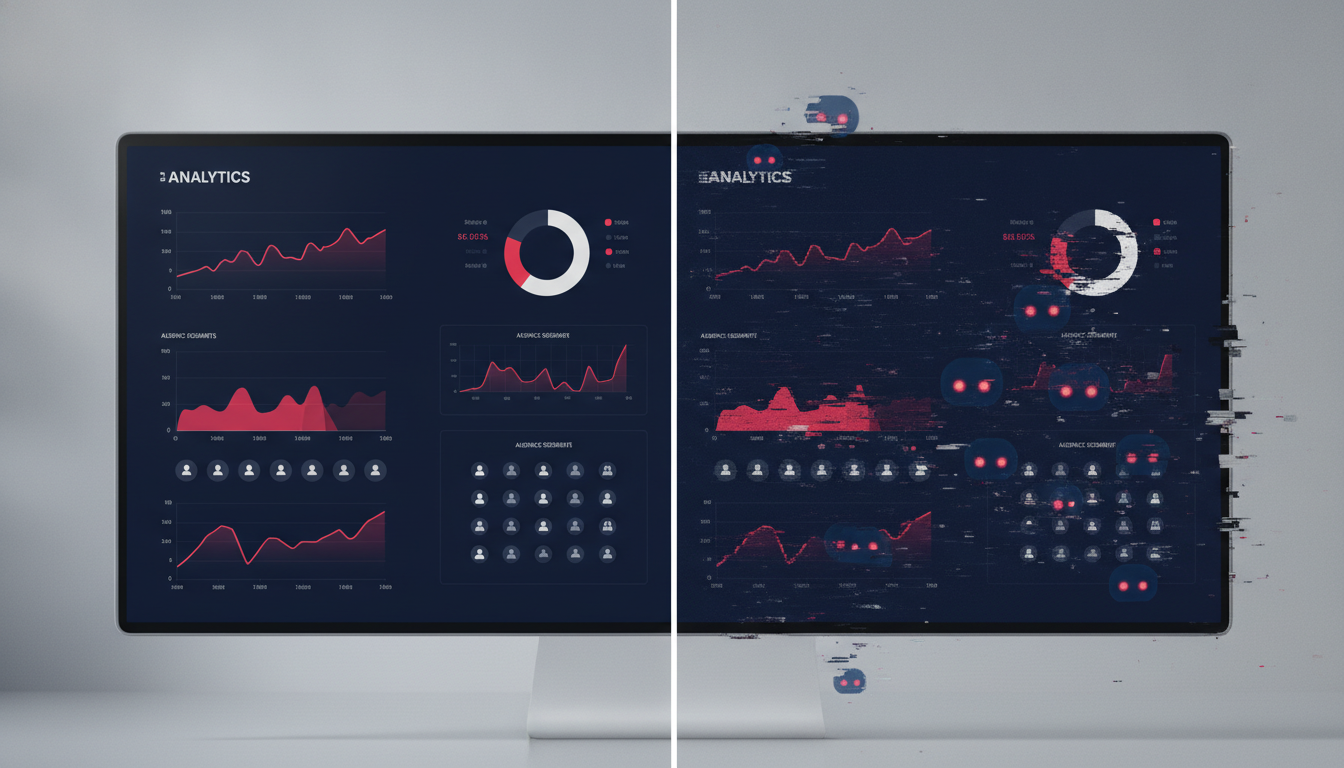
Your retargeting audiences are being built on a lie, and most brands don’t know it yet. Bot and AI traffic has grown to the point where it’s entering your pixel-based audiences, inflating your segment sizes, and warping the attribution signals you’re using to make real budget decisions. For CPG and DTC performance marketers, this is a data integrity crisis sitting inside your ad account.
Why Bot Traffic Hits Performance Campaigns Harder Than Brand Campaigns
Brand campaigns measure impressions and reach. If a bot inflates those numbers, the damage is real but diffuse.
Performance campaigns are different. Every bot that fires your pixel becomes a candidate for your retargeting pool. Every AI crawler that loads your product page looks, to your platform, like a potential high-intent shopper. Your audience segment grows. Your CPMs hold steady. Your conversion rates quietly drop. Your team starts pulling levers that were never the problem.
This is the specific damage pattern we see: inflated audience size, declining segment conversion rate, and an account team chasing creative and bid adjustments when the real issue is upstream in the data.
What “AI Traffic” Actually Means for Your Pixel
There are at least two distinct categories of non-human traffic hitting e-commerce sites right now, and they require different responses.
The first is traditional bot traffic: scrapers, crawlers, competitive intelligence tools, and malicious click fraud. This traffic has no purchase intent and no value. It should be identified and excluded from your audience segments as standard hygiene.
The second is AI agent traffic: shopping assistants, AI-powered search crawlers, and agentic commerce tools that are genuinely evaluating products on behalf of real buyers. This traffic is more complicated. We covered this shift in detail when we looked at how agentic commerce is changing what CPG brands must do in retail media. Blocking this traffic reflexively may mean cutting real purchase intent out of your funnel.
The brands getting this right are making that distinction. The ones getting it wrong are treating all non-human traffic as equivalent, either ignoring or blocking all of it.
How to Audit Your Retargeting Pool for Non-Human Inflation
This isn’t a complicated process, but it’s one that almost no one runs on a regular cadence.
Here is where to start:
- Pull your pixel-fired audience against your session quality data. Cross-reference audience size growth with bounce rate, session duration, and pages per session. A spike in audience size with no corresponding improvement in on-site engagement is a signal.
- Segment by traffic source before adding to retargeting pools. Organic search, direct, and referral traffic all carry different bot exposure rates. Direct traffic in particular has become a hiding spot for crawlers.
- Set minimum engagement thresholds for retargeting eligibility. A visitor who loaded one page for two seconds and bounced should not be in your high-intent retargeting segment. Build that logic into your audience rules.
- Review your attribution window data for non-converting touchpoints. If your view-through attribution is crediting sessions that show zero downstream engagement, you have bot contamination in your conversion path.
- Ask your DSP what they are doing about it. Most will give you a PR answer. Push for specifics: what invalid traffic filtering standards they use, how often they update them, and what recourse you have when fraud is identified post-campaign.
We have seen brands running retargeting campaigns where more than 20 percent of their audience segments showed engagement patterns consistent with non-human traffic. That isn’t a rounding error. That is a material waste of budget.
The Attribution Problem Nobody Is Talking About
Corrupted retargeting pools are bad. Corrupted attribution data is worse.
When bots and AI crawlers enter your measurement environment, they don’t just inflate audiences; they create false touchpoints in your attribution model. A bot that loads your product page and fires a pixel event looks like a mid-funnel touchpoint. If your attribution model is giving credit to that session, it distorts which channels appear to drive consideration.
This is especially damaging for brands running multi-touch attribution or any model that weights assisted conversions. Channels that are best at reaching real humans start to look less effective because they are being compared against a pool of activity that includes non-human traffic. We’ve covered the broader attribution reliability problem before, including why AI agent attribution is broken and what CPG and DTC brands should do about it.
The fix is cleaning the data before it enters the model.
Platforms Won’t Solve This for You
Google, Meta, and most major DSPs have built-in invalid traffic detection. What they won’t tell you is that their financial incentive is to count as much valid traffic as possible, and their definition of “invalid” is narrower than you think.
Platform-level filtering catches obvious fraud, but it doesn’t catch the gray zone of AI crawlers, shopping agents, and sophisticated bots. That gap is your problem to solve, not theirs.
Human oversight of your data inputs isn’t optional here. Automated platform protections are a floor, not a ceiling. Brands that treat audience hygiene as an ongoing operational discipline are the ones whose performance data can actually be trusted.
That is the kind of work our team at Junction 37 does for CPG and DTC clients. Not just campaign execution, but making sure the data underneath the campaigns is worth acting on.
—
FAQ
What is bot and AI traffic in the context of performance media?
Bot and AI traffic refers to website visits generated by automated programs rather than human users. This includes traditional web scrapers and crawlers, click fraud bots, and newer AI-powered agents that browse and evaluate products on behalf of human shoppers. For performance advertisers, the problem is that most pixel-based measurement systems cannot reliably distinguish these visits from human ones.
How does bot traffic corrupt a retargeting pool?
When a bot visits a page that has a retargeting pixel installed, it triggers the same audience-building logic as a human visit. The bot gets added to your audience segment. Over time, a meaningful share of your retargeting pool can be made up of non-human visitors who will never convert, which inflates segment size while depressing conversion rates.
Should CPG and DTC brands block all AI traffic?
No. Some AI traffic represents real purchase intent from shopping agents acting on behalf of human buyers. Blocking all of it means potentially excluding buyers at the evaluation stage of their journey. The right approach is to classify traffic types, block obvious fraud and low-quality crawlers, and build engagement-based filters that keep only high-quality sessions in your retargeting segments.
How often should brands audit their audience segments for non-human inflation?
Audience hygiene should be reviewed at least monthly for active performance campaigns, and immediately any time you see a spike in audience size that isn’t explained by a corresponding increase in site traffic quality. It should also be part of any new campaign setup and any post-campaign attribution review.
—
Ready to find out what is actually in your retargeting pools? The Junction 37 team runs full audience integrity audits for CPG and DTC brands, so your media budget is being spent on real humans with real purchase intent. Let us take a look.
—
Chris Pyne, Founder and CEO of Junction 37 and its sister venture Series A. He built Cortex, J37’s proprietary AI-driven planning ecosystem, and pioneered the integration of predictive marketing science into client strategy. Previously, Chris held C-suite roles at OMD USA and MediaCom, where he led planning for $7B in billings and 700+ employees.