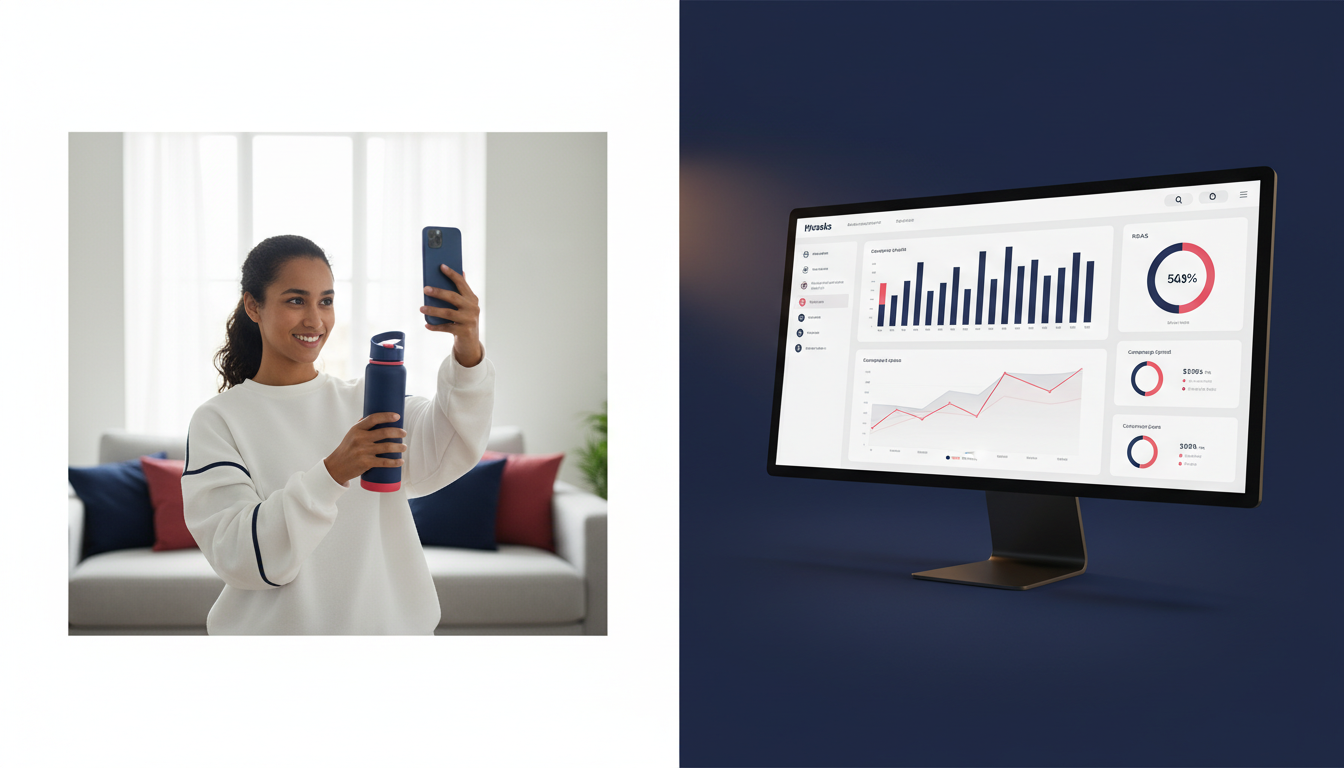
The real question isn’t “how do you find good creator content?” It’s “how do you turn creator content into a paid media engine that drives measurable return?” Those are two completely different problems and most CPG brands are only solving the first one.
Scoring and identifying brand-suitable creator posts is useful. But it’s a quality filter, not a growth strategy. What happens after you find the content is what separates brands that treat creator programs as awareness plays from brands that use them to move product.
Creator Content Without a Performance Media Strategy Is Just Expensive UGC
Brands are spending real money on creator partnerships: flat fees, gifting, revenue shares, content licensing. The average mid-tier influencer deal runs anywhere from $5,000 to $25,000 per post depending on category and audience size. That’s a significant line item before you’ve spent a dollar on media.
If that content lives and dies on organic reach, you’re leaving most of that investment on the table.
The brands getting outsized returns from creator programs treat every piece of content as a paid media asset from day one. That means creator briefs are built around ad formats, not just aesthetics. It means usage rights are negotiated upfront. It means the content is in testing rotation within 72 hours of approval; not sitting in a Dropbox folder waiting for someone to “get to it.”
How to Build a Creator-to-Paid Pipeline That Actually Scales
This is the operational piece most brands skip. Here’s how a performance media approach to creator content actually works:
1. Brief for the platform, not the creator’s feed. A creator’s organic content and a Meta or TikTok ad serve different jobs. Brief creators with the end placement in mind — aspect ratio, hook timing, CTA placement. You’ll save hours of post-production.
2. Build a scoring framework before you launch, not after. You need defined criteria for what makes a piece of content worth amplifying. Brand safety is baseline. Beyond that, look at hook rate potential, clarity of product benefit, and whether the content can carry a direct response message without feeling forced.
3. Test ruthlessly and fast. Launch with a minimum of 3-5 creative variants per ad set. Let data tell you what’s working within the first 7-10 days. Kill underperformers early. Double down on winners before fatigue sets in. Creator ad creative typically peaks and fades faster than produced content.
4. Treat creative refresh as a media cost. Creator content has a shorter shelf life than studio-produced ads. Budget for ongoing content supply, not a one-time batch. If your creative refresh cycle is longer than 30 days, your performance will show it.
5. Connect creator content performance back to business outcomes. Click-through rate is not a business outcome. Track down-funnel — cost per acquisition, return on ad spend, new customer rate. If your creator ads can’t be tied to those numbers, you don’t have a performance program. You have a brand awareness program dressed up in performance language.
What Size Brand Can Actually Do This?
Here’s where the Nestlé story gets interesting and a little misleading. The tools they’re using are sophisticated and built for enterprise scale. But the underlying playbook is not size-dependent.
A DTC brand doing $5M in annual revenue can run a lean creator-to-paid pipeline with three to five creator partners, a clear testing framework, and a media budget of $15,000-$30,000 a month. The advantage smaller brands have is speed. No legal review cycles that take three weeks. No brand safety committee. Decisions get made and content gets into market while larger competitors are still in approval.
The brands that will win the next phase of creator-driven performance media aren’t necessarily the ones with the biggest budgets. They’re the ones with the tightest feedback loops between creative and media.
The Agency Problem No One Talks About
Most agencies separate creative and media into different teams, different P&Ls, sometimes different companies entirely. Creator content gets managed by a social or influencer team. Paid media gets managed by a media buying team. The two rarely talk in real time.
That structural disconnect is expensive. Creative decisions get made without media context. Media budgets get committed before creative has been validated. And the client ends up paying for both: coordination costs, rework, and ultimately underperforming campaigns.
At Junction 37, our performance media approach treats creative and media as one system. Creator content doesn’t go to paid until it’s been evaluated against performance criteria. And our strategy work ensures brands aren’t just finding good content. They’re building the infrastructure to make it work harder over time.
That’s not a feature. It’s the whole point.
Ready to build a creator content pipeline that performs, not just posts?
Talk to Junction 37 about performance media for your brand.
FAQ: Creator Content and Performance Media
What is creator content performance media?
Creator content performance media is the practice of taking content produced by creators or influencers and running it as paid advertising — optimized for specific platforms, audience targeting, and measurable business outcomes like ROAS and cost per acquisition.
How do you know if creator content is ready to run as a paid ad?
Evaluate it against four criteria: brand safety, clarity of product benefit, hook strength in the first two to three seconds, and whether it can carry a direct response message naturally. If it passes those four, it’s worth testing in paid rotation.
How much should CPG brands spend to amplify creator content in paid media?
There’s no universal number, but a useful starting point is spending at least 1x to 2x the cost of content creation on paid amplification. If you’re spending $10,000 on creator partnerships, plan for $10,000 to $20,000 in media budget to make it perform.
Do you need enterprise-level tools to run a creator-to-paid pipeline?
No. The tools help at scale, but the fundamentals – clear briefs, fast testing, and tight creative-media feedback loops — are available to brands of any size. The process matters more than the platform.
Chris Pyne, Founder, Junction 37 – 30+ Years in Performance Media.