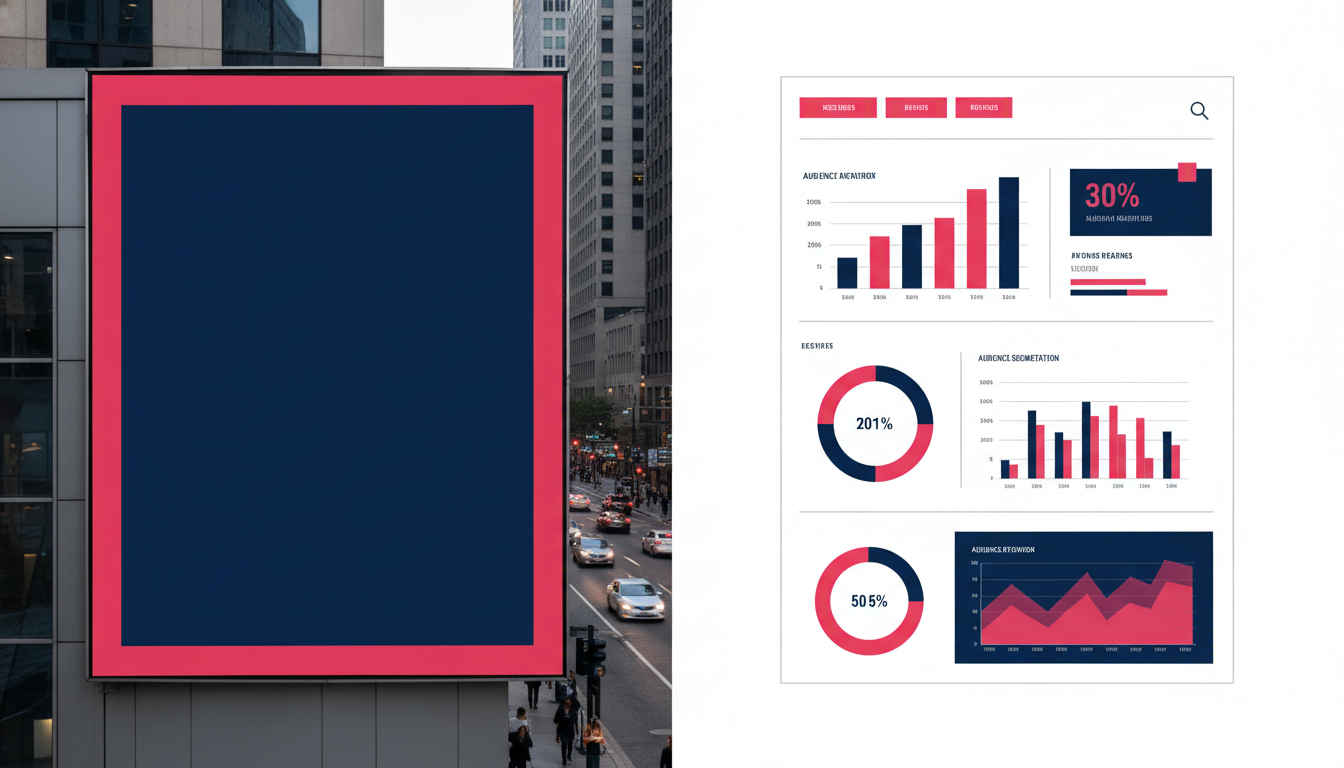
Programmatic DOOH Is Finally a Performance Channel — Start Treating It Like One
For years, out-of-home advertising lived in a different budget bucket than performance media. Brand money. Awareness spend. The kind of investment you made when you wanted to look big, not necessarily perform well. But programmatic DOOH has quietly changed the rules — and most CPG and DTC brands haven’t caught up to what that actually means.
The short answer: programmatic DOOH is now a targetable, measurable, attribution-capable channel. If you’re still buying it like a billboard, you’re leaving performance on the table.
Why the Old OOH Playbook Doesn’t Apply Anymore
Traditional out-of-home was a reach game. You bought impressions against a geography, crossed your fingers that the right people walked by, and called it brand building. Measurement was an afterthought — if it happened at all.
Curated programmatic DOOH marketplaces have fundamentally broken that model. You can now buy screens by audience segment, daypart, retail proximity, weather trigger, and purchase behavior. That’s not OOH logic. That’s performance media logic applied to physical space.
The brands winning here aren’t treating DOOH as a prestige play. They’re building it into their full-funnel architecture — connecting upper-funnel screen exposure to lower-funnel conversion signals.
The Measurement Gap Is the Real Problem
Here’s the honest challenge: the technology has outpaced most brands’ ability to measure it properly.
Curated marketplace inventory exists. Audience targeting exists. What often doesn’t exist is a clean attribution framework that connects a DOOH impression to a purchase, a site visit, or a sign-up. That gap is where budgets go to die.
If you’re a DTC brand, this is solvable. Mobile device ID matching, foot traffic studies, and geo-lift measurement are all mature enough to give you directional signal on DOOH performance. It’s not perfect. But it’s not blind either.
For CPG brands selling through retail, it’s harder — but panel data and retailer loyalty data are increasingly being used to close that loop. The brands doing this well have built the measurement framework *before* they bought the inventory, not after.
How to Actually Run Programmatic DOOH Like a Performance Channel
If you’re ready to stop treating DOOH as a vibes-based brand play, here’s how to approach it differently:
- Define your audience first, not your markets. Don’t buy cities. Buy screens that index against your actual customer profile — income bracket, lifestyle signals, proximity to purchase points.
- Set conversion KPIs before launch. Decide what success looks like before you spend a dollar. Foot traffic lift? Online search volume increase? Retailer sales velocity? Pick something measurable and hold to it.
- Use dayparting as a performance lever. Reaching a fitness-conscious buyer at 6am near a gym is not the same as reaching them at 2pm anywhere. Time and context change conversion probability significantly.
- Layer DOOH into a broader channel sequence. DOOH works best as a reinforcement signal, not a standalone tactic. Map it against your paid social and search activity to create a coordinated impression sequence.
- Run geo-lift tests, not just reach reports. A vendor telling you your campaign delivered 4 million impressions is not the same as proving it moved the needle. Demand lift data or don’t call it performance.>
What Curated Marketplaces Actually Change
The shift toward curated DOOH marketplaces matters because it solves the quality problem that plagued early programmatic OOH. Garbage inventory, irrelevant screen placements, and opaque supply chains all eroded trust in the channel early on.
Curated marketplaces — where premium publisher inventory is packaged with audience and contextual data — bring discipline to a channel that badly needed it. Think of it like the shift from open web display to private marketplace deals in digital. The technology isn’t new. The application to physical space is.
For performance-focused brands, this is the version of DOOH worth investing in. Not the spray-and-pray remnant inventory. The intentional, audience-verified, contextually relevant buy.
Our performance media practice is built around this kind of channel thinking — applying rigor where the industry defaults to guesswork.
The Bottom Line
Programmatic DOOH is not a brand awareness tax. It’s a performance channel that happens to live in physical space. The brands that treat it that way — with real targeting, real measurement, and real accountability — will pull ahead of the ones still buying it on instinct and gut feel.
If your current agency is selling you DOOH as a reach play with no attribution plan attached, that’s a problem worth addressing.
Our strategy team helps CPG and DTC brands build full-funnel media frameworks that include channels like programmatic DOOH — with measurement built in from day one, not bolted on at the end.
Talk to Junction 37 about building a performance media strategy that actually accounts for DOOH →
FAQ: Programmatic DOOH for CPG and DTC Brands
What is programmatic DOOH?
Programmatic DOOH (digital out-of-home) is the automated buying and selling of digital billboard and screen inventory using data, audience targeting, and real-time bidding — similar to how digital display advertising is transacted, but applied to physical screens in public spaces.
Can programmatic DOOH be measured like a digital performance channel?
Yes, with the right framework. Measurement methods include mobile device ID matching, geo-lift studies, foot traffic attribution, and panel-based purchase data. It’s not as precise as click-based digital channels, but directional performance signal is very achievable with proper setup.
What’s the difference between standard DOOH and curated marketplace DOOH?
Standard DOOH buying often means purchasing broad inventory with limited audience data. Curated marketplaces package premium publisher screens with audience segments, contextual targeting, and quality controls — giving buyers more precision and transparency over where their ads actually run.
Is programmatic DOOH right for DTC brands with small budgets?
It depends on your market concentration. DOOH performs best when your audience is geographically concentrated enough to justify the CPM. For DTC brands in dense urban markets or with strong regional retail presence, the channel can be very efficient. For highly distributed national audiences with small budgets, other channels will likely deliver better ROI first.
Chris Pyne, Founder, Junction 37 – 30+ Years in Performance Media